





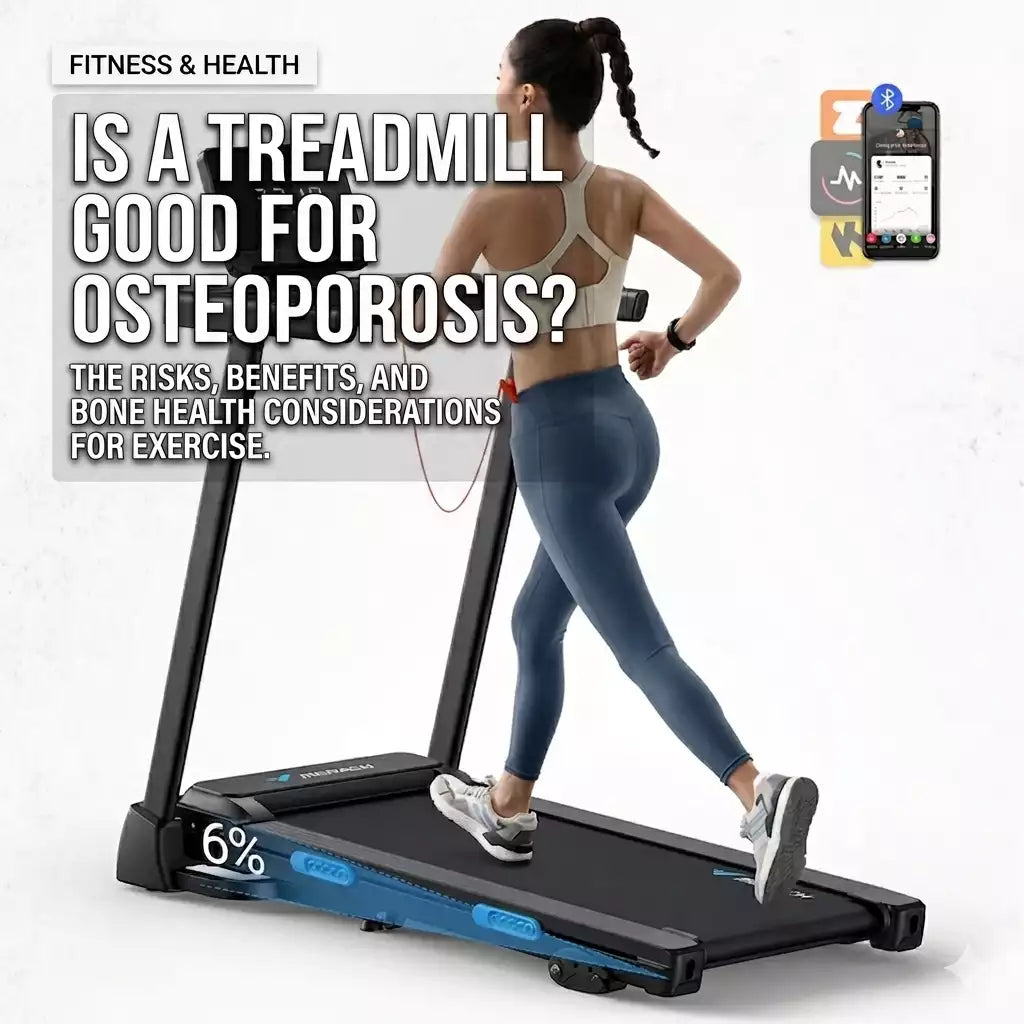
If you've been diagnosed with osteoporosis or osteopenia, you're probably wondering which exercises can help protect your bones without putting you at risk. Treadmill walking often comes up as an option, but does it actually work?
The short answer: yes, a treadmill can be a beneficial tool for people with osteoporosis, but there's more to the story. Walking on a treadmill provides weight-bearing exercise—which means your bones support your body weight while you move. This type of activity can help maintain bone density and even stimulate bone formation. But the effectiveness depends on several factors, including how you use the treadmill, your exercise intensity, and your current bone health status.
Let's look at what the research says and how you can make treadmill walking work for your bones.
Why Weight-Bearing Exercise Matters for Bone Health
Your bones respond to the stress and impact you put on them. When you walk, jog, or stand on your feet, gravity forces your bones to work harder. This mechanical stress signals your body to maintain or build bone tissue.
Weight-bearing exercises work because they create what's called ground reaction force—basically, the impact between your feet and the ground. Treadmill walking falls into the category of low-impact weight-bearing exercise. While it might not have the same bone-building punch as high-impact activities like jumping or running, it offers bone benefits without excessive stress on your joints.
Studies show that walking alone might not be enough to dramatically increase bone mass, but it can help slow bone loss and prevent further deterioration. Research involving postmenopausal women found that supervised treadmill walking programs improved bone turnover markers—indicating that bones were actively remodeling and strengthening.
Benefits of Treadmill Walking for Osteoporosis
Using a treadmill offers several advantages for people managing osteoporosis. First, it provides a controlled environment. You can adjust the speed, monitor your heart rate, and exercise regardless of weather conditions.
Treadmills with cushioned platforms—like the MERACH T12 Incline Treadmill—offer shock absorption that reduces joint impact while still providing the weight-bearing benefits your bones need. The MERACH T12 also features 3 incline levels, which can increase the intensity of your workout and potentially provide greater bone-stimulating benefits without having to walk faster.
Another benefit? Consistency. Research suggests that moderate-intensity treadmill walking performed 3 times per week for at least 30 minutes can positively affect bone health. With a home treadmill, you're more likely to stick with your routine since you can exercise anytime without traveling to a gym.
The convenience factor matters more than you might think. Studies indicate that breaking up your walking into shorter, more frequent sessions—say, two 20-minute walks instead of one 40-minute session—might actually help your bones respond better to the exercise stimulus.
Getting the Most Out of Your Treadmill Workouts
Intensity and duration make a difference. Walking slowly for 10 minutes won't give you the same bone benefits as brisk walking for 30 minutes. You'll want to aim for a pace that gets your heart rate to about 55-70% of your maximum heart rate.
Here's what works: Walk at a brisk pace where you can still talk but would find it difficult to sing. If your treadmill has an incline feature—like the MERACH T12's adjustable levels—use it. Walking uphill increases the load on your bones and muscles without requiring you to walk faster.
Try to exercise at least 3 days per week, with each session lasting 30 minutes. And don't just rely on walking. Combine your treadmill routine with strength training exercises 2-3 times per week. Resistance exercises target specific bones and build the muscles that support your skeleton.
The MERACH T12's app connectivity lets you track your progress in real time, which can help you stay motivated and ensure you're meeting your exercise goals consistently.
Safety Considerations and When to Be Cautious
Not everyone with osteoporosis should jump straight onto a treadmill. If you have severe osteoporosis or have already experienced fractures, high-impact exercise might not be safe for you.
Talk with your doctor or physical therapist before starting any new exercise program. They can help you determine whether treadmill walking is appropriate based on your bone density levels and fracture risk.
Some people benefit more from even gentler options initially, especially if they're frail or have poor balance. If you're new to exercise, start slowly. Begin with flat walking at a comfortable pace and gradually increase your speed and incline over several weeks.
Watch your form. Stand upright, swing your arms naturally, and avoid gripping the handrails tightly. Leaning on the handrails reduces the weight-bearing benefits and can affect your posture.
Beyond Walking: A Complete Bone Health Strategy
A treadmill can be part of your bone health toolkit, but it shouldn't be your only strategy. You'll get better results by combining multiple approaches.
Balance exercises help prevent falls, which is just as important as building bone strength. Tai chi, yoga, or simple standing balance drills can reduce your risk of fractures by 60% or more according to some research.
Strength training targets specific bones and muscles. Focus on exercises that strengthen your back, hips, and legs—the areas most vulnerable to osteoporotic fractures.
Don't forget nutrition. Your bones need adequate calcium and vitamin D to respond to exercise. Think of exercise as the stimulus and nutrition as the building blocks your body needs to strengthen bone tissue.
And be patient. Bone remodeling takes time. You might not see changes in bone density measurements for several months, but that doesn't mean nothing's happening. Studies show positive effects after 3 months of consistent training, with more significant improvements appearing after 6-12 months of regular exercise.
Conclusion
A treadmill can definitely be a valuable tool for managing osteoporosis. It provides low-impact, weight-bearing exercise that helps maintain bone density, strengthens muscles, and reduces fall risk—all in a controlled, convenient environment.
But effectiveness depends on how you use it. Walk at a brisk pace, use an incline when possible, exercise consistently (at least 3 times per week), and combine your treadmill routine with strength and balance training. Equipment like the MERACH T12 Incline Treadmill makes it easier to follow through with these recommendations thanks to its adjustable incline, shock absorption, foldable design, and tracking features.
Most importantly, work with your healthcare team to create a personalized exercise plan that matches your current bone health status and fitness level. With the right approach, treadmill walking can be an effective part of your bone-strengthening strategy.
FAQs
Can walking on a treadmill rebuild bone density?
Walking on a treadmill can help slow bone loss and maintain current bone density, but it typically won't dramatically rebuild severely depleted bone on its own. It's considered a low-impact weight-bearing exercise that stimulates bone turnover and helps preserve bone mass. For best results, combine brisk treadmill walking with strength training exercises and ensure you're getting adequate calcium and vitamin D. Higher-impact activities may be needed to significantly increase bone density, though these aren't suitable for everyone with osteoporosis.
How often should I use a treadmill if I have osteoporosis?
Research suggests using a treadmill at least 3 times per week for 30 minutes per session at moderate intensity (55-70% of maximum heart rate) can benefit bone health. Some experts recommend breaking this into shorter, more frequent sessions—like two 20-minute walks—which may actually enhance bone response. Consistency matters more than duration. If you're new to exercise, start with 2-3 sessions per week and gradually increase frequency and intensity as your fitness improves.
Is a treadmill better than walking outside for osteoporosis?
Both offer similar weight-bearing benefits, but each has advantages. Treadmills provide a controlled environment with adjustable speed and incline, cushioned surfaces for shock absorption, and year-round availability regardless of weather. Walking outside offers natural terrain variations and may improve balance more due to uneven surfaces. For osteoporosis specifically, a treadmill with incline features can provide excellent bone stimulation in a safer, more predictable environment, making it easier to maintain consistent exercise habits.
Should I use the incline feature on my treadmill for bone health?
Yes, using an incline can increase the bone-strengthening benefits of treadmill walking. Walking uphill increases the load on your bones and muscles without requiring faster speeds, which provides greater mechanical stress—the stimulus bones need to maintain or build density. Start with a gentle incline (1-2%) and gradually increase as you build strength. The MERACH T12's 3 incline levels make it easy to progressively challenge your bones while still maintaining proper form and safety.
What exercises should I combine with treadmill walking for osteoporosis?
Treadmill walking works best when combined with resistance training and balance exercises. Include strength exercises 2-3 times per week that target your back, hips, and legs using resistance bands, weights, or bodyweight movements like squats and modified push-ups. Add balance training such as tai chi, standing on one foot, or heel-to-toe walking to reduce fall risk. Flexibility exercises also help maintain proper posture and range of motion. This combination approach addresses bone density, muscle strength, balance, and fracture prevention comprehensively.

Laisser un commentaire
Ce site est protégé par hCaptcha, et la Politique de confidentialité et les Conditions de service de hCaptcha s’appliquent.