





Choosing between a magnetic and air rowing machine can feel overwhelming when you're ready to bring the ultimate cardio workout home. Both types deliver full-body conditioning and low-impact exercise, but they work quite differently. We'll walk you through the key differences so you can make the right call for your fitness goals and living space.
How Air Rowers Work
Air rowers use a flywheel with fan blades to create resistance. When you pull the handle, the flywheel spins and pushes air around, creating resistance you need to overcome. The faster you row, the more resistance you get. This dynamic resistance system automatically adjusts to your effort level.
Think of it like riding a bike into the wind. The harder you pedal (or row), the stronger the resistance becomes. Most air rowers include a damper setting that controls airflow into the flywheel housing, letting you fine-tune how the stroke feels without directly changing resistance levels.
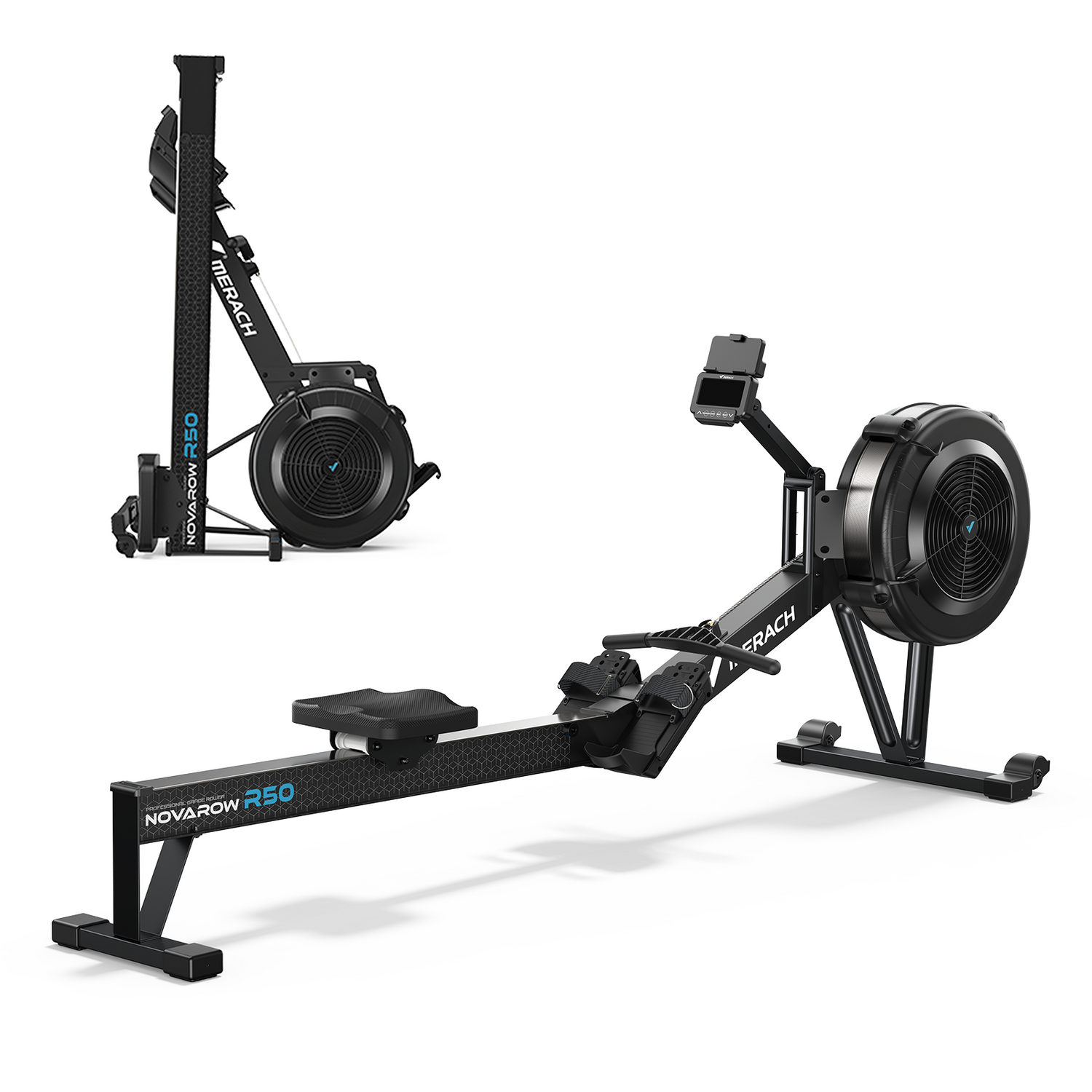
Air rowers don't need to be plugged in. They're self-powered, making them flexible for placement anywhere in your home. The NovaRow R50, for example, features 10 adjustable resistance levels with superior air resistance technology, Bluetooth tracking, and app connectivity—all without requiring a power outlet.
How Magnetic Rowers Work
Magnetic rowers create resistance through electromagnetic induction. Magnets positioned near a metal flywheel generate eddy currents that resist the flywheel's rotation. You adjust resistance by moving the magnets closer to or farther from the flywheel, typically using a dial or console controls.
Unlike air rowers, magnetic resistance stays constant at whatever level you set. If you set it to level 5, you'll feel the same resistance whether you're rowing slowly or sprinting. This preset resistance makes magnetic rowers ideal for people who want precise control over their workout intensity and the ability to progressively increase resistance over time.
Most magnetic rowers require external power—either batteries or a wall outlet—to operate the resistance system and console features.
Noise Levels: The Biggest Difference
Here's where these two types really differ. Air rowers produce a noticeable "whooshing" sound that gets louder as you row harder. The fan blades moving air create this rhythmic noise, which some people love and others find distracting. It can make watching TV during your workout challenging.
Magnetic rowers operate almost silently. Since the magnets never touch the flywheel, there's virtually no friction or noise. They're perfect for apartments, condos, or homes where you're sharing space with family members. You can row at any time without disturbing others.
Price and Value Considerations
Both types span a wide price range, but there are some general trends. Air rowers typically range from budget-friendly options around $300 to premium models hitting $1,200. The Concept2 Model D sits at the higher end as the industry standard, but newer brands now offer similar performance at lower prices.
Magnetic rowers often start cheaper—some entry-level models begin around $150—but high-end smart rowers with touchscreens and interactive training can exceed $2,500. Budget magnetic rowers offer good value, though they may not provide the most realistic rowing feel.
Workout Experience and Performance
Air rowers deliver what many athletes consider the most authentic rowing experience. The dynamic resistance closely mimics rowing on water, where your effort directly affects the resistance. This makes them outstanding for high-intensity interval training (HIIT) and explosive workouts. You can instantly shift from gentle strokes to all-out sprints.
Magnetic rowers provide a smoother, more controlled workout. The consistent resistance at each level makes them better for strength training programs where you need predictable resistance to track progressive overload. They're also friendlier for beginners who might find variable resistance intimidating.
Both types work the same muscles—legs, core, back, arms, and shoulders—and provide excellent cardiovascular benefits. The difference is in how the resistance responds to your effort.
Maintenance and Durability
Air rowers require occasional maintenance. You'll need to keep the fan blades clean from dust buildup to maintain proper operation. However, they have fewer complex parts and are generally durable. Many air rowers last for years with minimal upkeep.
Magnetic rowers need less frequent maintenance since there's no friction between parts. The sealed magnetic system doesn't collect dust the same way fan blades do. Both types can fold for storage, though specific portability depends on the model.
Which Type Is Better for You?
The answer depends on your specific situation. We recommend air rowers if you're training for performance, love HIIT workouts, want unlimited resistance that scales with effort, or don't mind some noise. They're also great if you prefer the authentic feel of rowing on water.
Go with a q1s magnetic rower if you live in an apartment or shared space where noise matters, want precise resistance control for progressive strength training, need to work out while others are sleeping, or prefer a more compact footprint.
For Canadians serious about rowing who want professional-grade performance at home, air rowers like the NovaRow R50 air rowing machine deliver exceptional value. With its ergonomic comfort, smart tracking capabilities, and foldable steel frame, it brings gym-quality training into your home without the premium price tag.
The Bottom Line
Neither type is universally "better"—they excel in different areas. Air rowers win for dynamic workouts and realistic rowing feel, while magnetic rowers take the crown for quiet operation and resistance precision. Both deliver outstanding full-body workouts that improve cardiovascular health, build strength, and stay easy on your joints.
Conclusion
Choosing between magnetic and air rowers comes down to your priorities. If noise isn't a concern and you want that authentic, water-like rowing experience with unlimited resistance, air rowers are your best bet. If you need quiet operation and prefer controlled, preset resistance levels for structured training, magnetic rowers make more sense. Consider your living situation, fitness goals, and budget. Either way, you'll be investing in one of the most effective full-body workout machines available. The right rower is the one you'll actually use consistently.
FAQs
Are air rowers louder than magnetic rowers?
Yes, air rowers produce a noticeable whooshing sound that increases with rowing intensity, while magnetic rowers operate almost silently. If you live in an apartment or need to work out early mornings or late nights, a magnetic rower's quiet operation makes it the better choice for shared living spaces.
Which type of rower is better for beginners?
Both work well for beginners, but magnetic rowers might feel less intimidating since you can set a specific resistance level and keep it constant. Air rowers automatically adjust resistance based on your effort, which some beginners find challenging. However, air rowers also let you start gently and build intensity naturally as you improve.
Do air and magnetic rowers work the same muscles?
Absolutely. Both types provide full-body workouts that engage your legs, glutes, core, back, shoulders, and arms. The resistance mechanism doesn't change which muscles you work—it only affects how that resistance feels and responds during your rowing stroke.
Can you get the same workout intensity on both types?
Yes, both can deliver intense workouts. Air rowers offer unlimited resistance that increases exponentially with speed, making them ideal for explosive HIIT training. Magnetic rowers provide controlled resistance up to their maximum level (often 16-20 levels), which works great for structured strength training and progressive overload.
Which rower requires less maintenance?
Magnetic rowers typically need less maintenance since they have fewer moving parts and no fan blades to clean. Air rowers require periodic cleaning of the fan blades to prevent dust buildup, but overall maintenance for both types remains minimal compared to other exercise equipment.


Leave a comment
This site is protected by hCaptcha and the hCaptcha Privacy Policy and Terms of Service apply.